Freetown Christiania, explained
Freetown Christiania is a self-governed neighbourhood of roughly 34 hectares in Christianshavn, Copenhagen, founded on 26 September 1971 in an abandoned military barracks and home to about 850–1,000 people. It is free to walk into, it is somebody’s home, and since residents dug up Pusher Street on 6 April 2024 the part visitors used to be warned about no longer exists.
I grew up in Christianshavn and spent nine years as a bike mechanic two streets from the Christiania gate, most of that time rebuilding the cargo trikes the Freetown designed, so I was in and out of the workshops most weeks for a decade. I am a neighbour, not a resident, and the difference matters. This is the version I give friends before they walk in.
What the place is
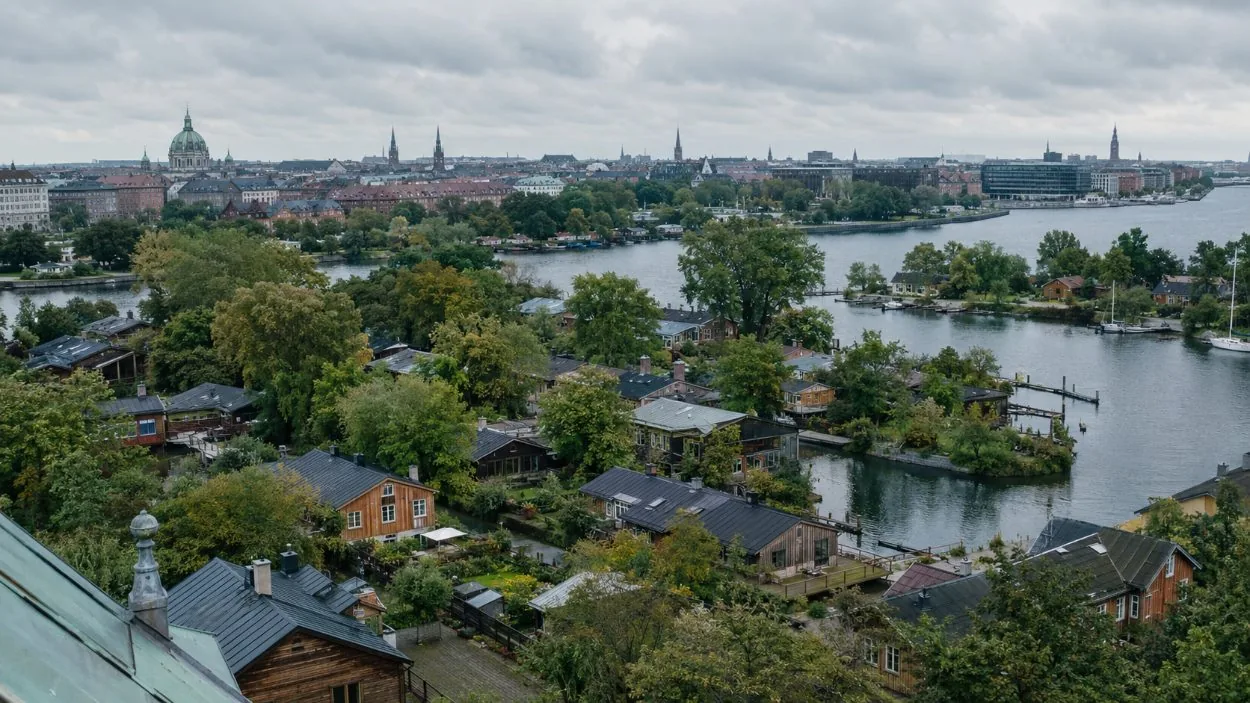
Christiania is a residential neighbourhood, roughly 34 hectares of Christianshavn including the old defensive ramparts and the Stadsgraven moat that wraps around them. The built part is a good deal smaller than the map suggests. Somewhere between 850 and 1,000 people live there, in houses they or their predecessors put up by hand, and about half a million visitors a year come to look at them. It is self-governed: decisions go through a residents’ plenum working towards consensus, with working groups for particular jobs, alongside the Foundation Freetown Christiania. Nobody sells tickets at the gate and nobody inside is performing for you. The most useful thing to hold in your head is that you are walking through somebody’s front garden.
1971, and how the legal argument ended
On 26 September 1971 squatters and activists moved into the abandoned Bådsmandsstræde military barracks, and the journalist Jacob Ludvigsen proclaimed the place a free town. Forty years of argument with the Danish state followed. Parliament legalised the area in 1989. In June 2011 the state agreed to transfer it to Foundation Freetown Christiania; residents made the first payment in July 2012 and began buying the land collectively. In July 2013 the special Christiania Law was repealed and ordinary Danish law has applied ever since. People still describe Christiania as being outside the system. It bought its way into the system, slowly, with a collective mortgage.
What 6 April 2024 changed
Almost everything a visitor has read about this neighbourhood concerns one short stretch of cobblestones. Pusher Street carried an open-air cannabis market for decades. In 2016 the stalls were removed after a shooting, and sales dropped by around 75% within two months. In August 2023 residents blocked the entrances with concrete barriers and steel bars. Then on the morning of 6 April 2024 they came out with crowbars, with the police cooperating, and dug the cobblestones up themselves to end the trade for good. Hard drugs had always been banned by the community in any case. What stands there now is an ordinary paved walkway, and the thing most people arrive nervous about no longer exists. The part actually worth seeing was always somewhere else.
How to behave
The community’s own rules are posted on the wooden gate, and they are short: no hard drugs, no violence, no weapons. Three more are worth knowing before you go in. Do not run — for historical reasons running reads as trouble here, and it is the rule visitors break without realising they have. Ask before you photograph residents, their homes or close-ups of people; the old Pusher Street stretch and anywhere with a no-photo sign stay off limits, and plenty of those signs are still up. And read the paths between houses as private drives, because that is what they are. Cars do not come into any of it: Christiania is pedestrian and bicycle only, and bikes are welcome up to the gate but walked inside rather than ridden.
What is worth walking to
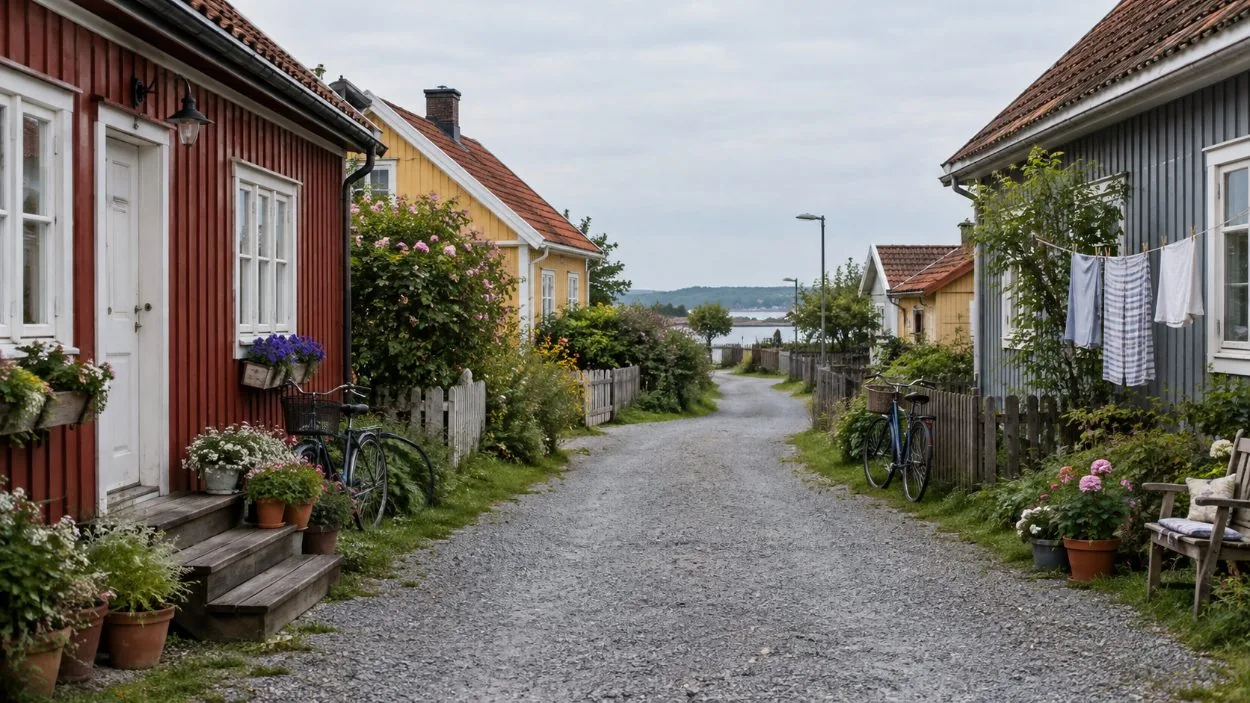
Den Grå Hal, the Grey Hall, sits in a former riding house and takes concerts and the Christmas market. Loppen does live music, Nemoland is the outdoor café and stage with free concerts on summer Sundays, ALIS Wonderland is the skate bowl. There is the Christiania Art Gallery, Badehuset the sauna, Christiania Bryghus the brewery, and Green George, a sculpture of recycled wood down by the water. Then the half most day-trippers never reach: the ramparts and the lake, self-built houses along the bank, quiet in a way little else this close to the middle of Copenhagen manages. The Christiania cargo trike was designed in these workshops in the 1980s and went on to become a standard piece of Copenhagen street furniture. On the way out of the main gate, the yellow sign facing you reads “You are now entering the EU”. Next door, the Church of Our Saviour has a staircase that winds up the outside of the spire, and several of these tours stop there.
When to come
The streets are open at all hours, because people live on them, but the cafés, galleries and workshops wake up later, roughly from ten or eleven in the morning. Weekday afternoons are the quietest. Sunday mornings feel local, and are the worst time to expect anything to be open. Tours run rain or shine and Copenhagen weather turns over fast, so a shell jacket beats an umbrella and the cobbles argue for shoes you can walk two hours in.
Why a guide earns their keep
You can walk in on your own for nothing, and a lot of people should. What a guide buys you is the difference between photographing a mural you do not understand and being told who painted it and what the argument behind it was, between wandering down a lane and knowing that the lane is a driveway. The good ones also tell you when to put the camera away. The walking tours give the Freetown about half an hour with free time in it; the bike and e-bike tours fold it into a wider loop of the city; the private walks let you ask the questions you would not ask in front of nine strangers. Whichever you take, the same thing applies at the gate: read the rules, do not run, and remember that the interesting part is not the street everybody warned you about.
Ready to book?
The two-hour walking tour from Christianshavn is the one most people should start with — small group, a local guide, and the etiquette explained before you are standing in front of somebody’s house. Compare the alternatives on the tours page, or check dates below.
Frequently asked questions
Do I need a guide to go into Christiania?
No. Anyone can walk in through the main gate on Prinsessegade at any hour, and there is nothing to buy at the entrance. A guide buys you context and confidence about what is and is not acceptable once you are inside. The honest comparison is on guided versus self-guided.
How long does a visit take?
Most guided walks give Christiania about half an hour inside a two-hour tour of Christianshavn. Left to your own pace, an hour covers the main lane and the Grey Hall, and half a day gets you round the ramparts and the lake. More on how long to spend.
Is it still worth visiting after Pusher Street closed?
That depends on what you came for. The market is gone and is not coming back, which is the point of what happened in April 2024. The self-built houses, the workshops, the ramparts and the concert halls are all still there, and the honest case either way is on its own page.